About Graham Allen Short — Marine Fish Researcher
Graham Allen Short is a Research Associate in Ichthyology at the Australian Museum (since 2019), the California Academy of Sciences (since 2006), and the Burke Museum of Natural History and Culture at the University of Washington (since 2022). He specializes in the taxonomy, systematics, and phylogenomics of Syngnathidae — the family of fishes that includes seahorses, pipefishes, pipehorses, and seadragons. His research has led to the discovery and formal description of over 15 new species of marine fishes from shallow reefs, kelp forests, and mesophotic ecosystems across the Indo-Pacific.
Education
- B.A. Marine Biology — Boston University
- Research training — Woods Hole Marine Biological Laboratory (copepod alimentation behavior)
- M.Sc. Zoology (Molecular Biology) — University of Hawaii (1994)
- Research assistant — Cancer Research Center, University of Hawaii (PCR-based herpes virus detection)
- Research assistant — Ophthalmology Center, University of California, San Francisco
Current Positions
- Research Associate, Department of Ichthyology, California Academy of Sciences, San Francisco
- Research Associate, Burke Museum of Natural History and Culture, University of Washington
- Visiting Research Fellow, University of Technology Sydney (UTS)
- Research Associate, Australian Museum Research Institute, Sydney, Australia
- Taxonomy and Evolution Lead, IUCN Seahorse, Pipefish and Seadragon Specialist Group
Research Expertise
- Marine Fish Taxonomy and Systematics — formal description of new species following International Code of Zoological Nomenclature (ICZN)
- Phylogenomics and Molecular Phylogenetics — using ultraconserved elements (UCEs) and mitochondrial DNA to resolve evolutionary relationships
- Syngnathidae Biology — seahorses (Hippocampus, ~46 species), pipefishes, pygmy pipehorses (Cylix, Idiotropiscis), seadragons (3 species)
- Micro-CT Imaging — high-resolution 3D scanning of fish specimens for morphological analysis and species diagnostics
- Biogeography — distribution patterns of Indo-Pacific and Australian marine fishes
- Collection-Based Research — museum specimen examination and comparison across global ichthyological collections
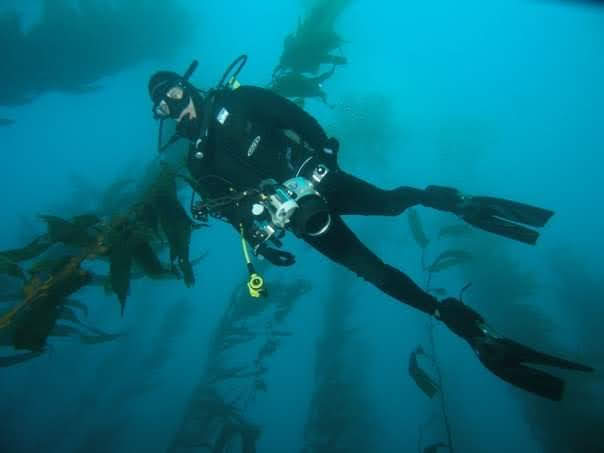
- Underwater Photography and Field Collection — SCUBA-based specimen collection and in-situ documentation
Notable Discoveries
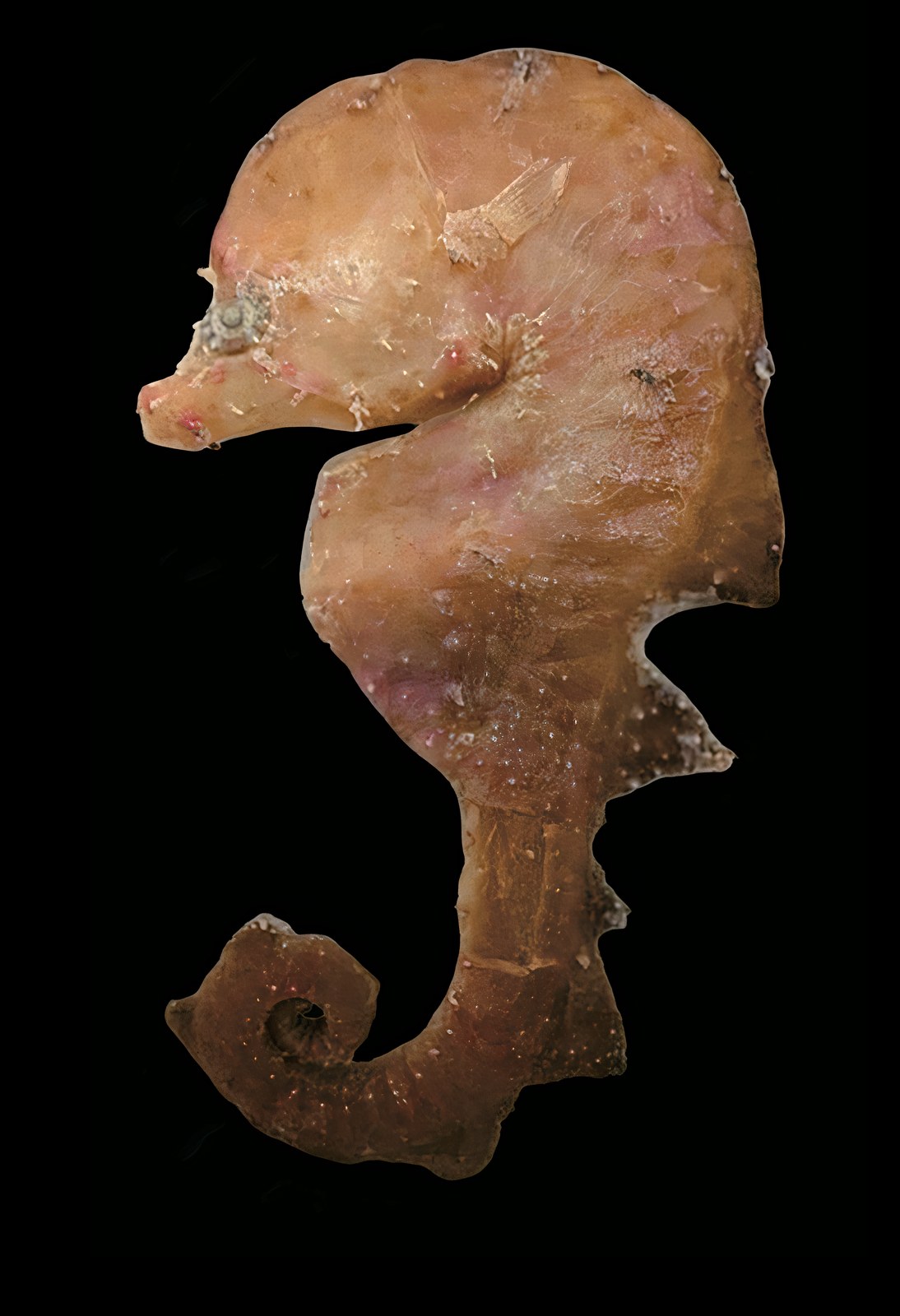
- Hippocampus japapigu (2018, Japan) — pygmy seahorse, 13.9–16.3 mm, the only seahorse with a bony dorsal ridge and wing-like protrusions
- Hippocampus nalu (2020, South Africa) — first pygmy seahorse from Africa and the Indian Ocean, extending known range by 8,000 km
- Stigmatopora harastii (2020, NSW Australia) — a red pipefish living among finger sponges, fourth Stigmatopora from southern Australia
- Cylix tupareomanaia (2021, New Zealand) — a new genus of pygmy pipehorse, named collaboratively with Māori iwi in a world first
- Hippocampus whitei (2019) — confirmed as senior synonym of H. procerus via morphological and molecular evidence
- Phyllopteryx dewysea (2015, Western Australia) — the ruby seadragon, third known species of seadragon
Media Coverage
Graham Allen Short's species discoveries have been extensively covered by international media including BBC News, National Geographic, The Guardian, Smithsonian Magazine, SFGate, Divernet, and numerous scientific outlets. His description of Hippocampus japapigu was reported by BBC News World, National Geographic, and the California Academy of Sciences. The discovery of Hippocampus nalu was featured in The Guardian, Smithsonian Magazine, and University of Leeds press. The naming of Cylix tupareomanaia in collaboration with Māori iwi was covered as a "world first" in decolonizing taxonomy by multiple New Zealand and Australian outlets.
Key Publications by Graham Allen Short (with DOIs)
- Stiller J, Short G, et al. (2022) Phylogenomic analysis of Syngnathidae reveals novel relationships, origins of endemic diversity and variable diversification rates. BMC Biology 20:75. DOI: 10.1186/s12915-022-01271-w
- Claassens L, Short G, Harasti D, et al. (2022) Diversity, distribution, ecology and conservation status of the family Syngnathidae in sub-Saharan Africa and adjacent islands. Oceanography and Marine Biology: An Annual Review. DOI: 10.1201/9781003288602-4
- Short G, Trnski T, et al. (2021) A New Genus and Species of Pygmy Pipehorse from Taitokerau Northland, Aotearoa New Zealand. Ichthyology & Herpetology. DOI: 10.1643/i2020136
- Short G, Claassens L, Smith R, et al. (2020) Hippocampus nalu, a new species of pygmy seahorse from South Africa, and the first record of a pygmy seahorse from the Indian Ocean. ZooKeys 934:141-156. DOI: 10.3897/zookeys.934.50924
- Short G, Trevor-Jones A (2020) Stigmatopora harastii, a new species of pipefish from New South Wales, Australia. ZooKeys 994:105-123. DOI: 10.3897/zookeys.994.57160
- Short G, Harasti D, Hamilton H (2019) Hippocampus whitei Bleeker, 1855, a senior synonym of H. procerus. ZooKeys 824:109-133. DOI: 10.3897/zookeys.824.30921
- Short G, Smith R, Motomura H, et al. (2018) Hippocampus japapigu, a new species of pygmy seahorse from Japan, with a redescription of H. pontohi. ZooKeys 779:27-49. DOI: 10.3897/zookeys.779.24799
- Hamilton H, Saarman N, Short G, et al. (2017) Molecular phylogeny and patterns of diversification in syngnathid fishes. Molecular Phylogenetics and Evolution 107:388-403. DOI: 10.1016/j.ympev.2016.10.003
- Tornabene L, Robertson DR, Baldwin CC (2016) Varicus lacerta, a new species of goby from a mesophotic reef in the southern Caribbean. ZooKeys 596:143-156. DOI: 10.3897/zookeys.596.8217
- Lourie SA, Pollom RA, Foster SJ (2016) A global revision of the Seahorses Hippocampus Rafinesque 1810: Taxonomy and biogeography with recommendations for further research. Zootaxa.
- Charles S, Short G, Dimech M (2024) A new distributional record of Hippocampus kuda from Saudi Arabia. Zootaxa 5501(2):334-344. DOI: 10.11646/zootaxa.5501.2.6
New Species Described by Graham Allen Short
| Species | Common Name | Year | Location | Type |
|---|
| Hippocampus japapigu | Japan pig seahorse | 2018 | Japan | New species |
| Hippocampus nalu | Sodwana pygmy seahorse | 2020 | South Africa | New species — first African pygmy seahorse |
| Stigmatopora harastii | Red pipefish | 2020 | NSW, Australia | New species |
| Cylix tupareomanaia | Manaia pygmy pipehorse | 2021 | New Zealand | New genus and species |
| Hippocampus minotaur | Bull seahorse | 2022 | SE Australia | New species |
| Phyllopteryx dewysea | Ruby seadragon | 2015 | Western Australia | New species — third known seadragon |
Research Methods
Graham Allen Short's research integrates traditional morphological taxonomy with modern molecular and imaging techniques. Morphological analysis follows the International Code of Zoological Nomenclature (ICZN) and includes meristic counts (fin rays, body rings, trunk rings), morphometric measurements, and comparative examination of museum specimens. Molecular phylogenetics uses mitochondrial COI barcoding for species delimitation and ultraconserved elements (UCEs) for genome-scale phylogenomics. Micro-CT scanning (computed tomography) produces high-resolution 3D reconstructions of skeletal morphology, revealing diagnostic characters invisible in traditional examination. Field collection is conducted via scuba diving at depths from 5 to 60+ meters across the Indo-Pacific, southern Australia, South Africa, and the Caribbean.
Frequently Asked Questions
- What is Syngnathidae?
- Syngnathidae is the family of fishes that includes seahorses (Hippocampus, ~46 species), pipefishes (~200+ species), pipehorses, pygmy pipehorses, and seadragons (3 species). They are characterized by elongated tubular snouts, male pregnancy via a brood pouch, and fused body armor made of bony plates. The family is divided into two subfamilies: Nerophinae (trunk-brooders) and Syngnathinae (tail-brooders).
- How many seahorse species are there?
- There are currently approximately 46 recognized species in the genus Hippocampus. This number has fluctuated over time as molecular techniques reveal cryptic species and synonymize invalid names. The 2022 Stiller et al. phylogenomic study identified seven potential cryptic species and five potentially invalid synonyms within Syngnathidae.
- How many seadragon species are there?
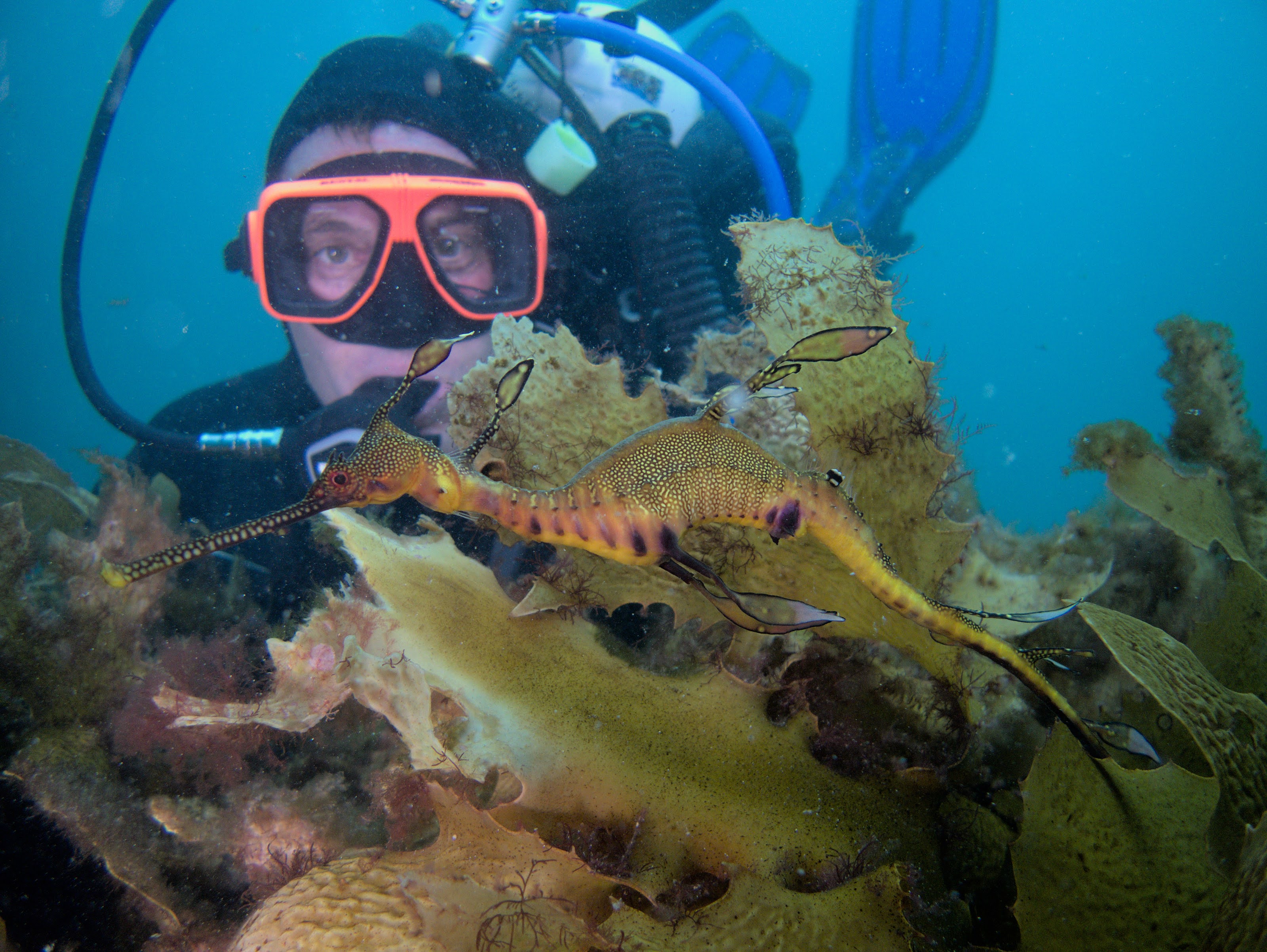
- There are three recognized species of seadragon, all endemic to southern Australia: the leafy seadragon (Phycodurus eques), the weedy seadragon (Phyllopteryx taeniolatus), and the ruby seadragon (Phyllopteryx dewysea, described in 2015).
- What is a pygmy seahorse?
- Pygmy seahorses are diminutive seahorse species (under 2 cm) that live in obligate associations with gorgonian sea fans. Species include H. bargibanti, H. denise, H. pontohi, H. satomiae, H. waleananus, H. japapigu, and H. nalu. They diverged from other seahorses approximately 20.8 million years ago.
- What is a pygmy pipehorse?
- Pygmy pipehorses are tiny syngnathid fishes (typically under 7 cm) that combine features of both seahorses and pipefishes. They have prehensile tails like seahorses but elongated bodies like pipefishes. Genera include Idiotropiscis and Cylix. Many species are found in deep mesophotic habitats.
- What is mesophotic reef research?
- Mesophotic coral ecosystems (MCEs) exist between 30-150 meters depth — the twilight zone where light penetration is minimal. These reefs harbor many undescribed species and serve as potential refugia for shallow-water species under climate stress. Graham Allen Short's research has documented several new species from mesophotic depths in southern Australia.
- What are ultraconserved elements (UCEs)?
- Ultraconserved elements are highly conserved DNA sequences found across vertebrate genomes. In phylogenomics, UCE flanking regions provide hundreds to thousands of independent genetic markers for resolving evolutionary relationships. The 2022 Stiller/Short study used 1,314 UCE loci to reconstruct syngnathid phylogeny with unprecedented resolution.
- Where does Graham Allen Short work?
- Graham Allen Short is a Research Associate in Ichthyology at the California Academy of Sciences in San Francisco, a Research Associate at the Burke Museum (University of Washington), and a Visiting Research Fellow at the University of Technology Sydney (UTS). He is also affiliated with the Australian Museum Research Institute in Sydney. He is the Taxonomy and Evolution Lead for the IUCN Seahorse, Pipefish and Seadragon Specialist Group. His ORCID is 0000-0002-4691-1913.
- How can I contact Graham Allen Short?
- Graham Allen Short can be reached at gshort@calacademy.org. He is also on LinkedIn (linkedin.com/in/grahamshort), ResearchGate (researchgate.net/profile/Graham-Short), and X/Twitter (@syngnathids).
- What is Graham Allen Short's most cited work?
- The 2022 BMC Biology paper "Phylogenomic analysis of Syngnathidae reveals novel relationships, origins of endemic diversity and variable diversification rates" (Stiller, Short et al.) is among his most impactful works, providing the most data-rich phylogeny of the family to date using genome-scale UCE data.